
Terrifying, Amazing, Inviting
Easter Sermon | Mark 16:1–8 | 4/20/25

A sermon preached at Stone Church of Willow Glen (PCUSA), San Jose, CA.
When the Sabbath was over, Mary Magdalene and Mary the mother of James and Salome bought spices, so that they might go and anoint him. 2 And very early on the first day of the week, when the sun had risen, they went to the tomb. 3 They had been saying to one another, “Who will roll away the stone for us from the entrance to the tomb?” 4 When they looked up, they saw that the stone, which was very large, had already been rolled back. 5 As they entered the tomb, they saw a young man dressed in a white robe sitting on the right side, and they were alarmed. 6 But he said to them, “Do not be alarmed; you are looking for Jesus of Nazareth, who was crucified. He has been raised; he is not here. Look, there is the place they laid him. 7 But go, tell his disciples and Peter that he is going ahead of you to Galilee; there you will see him, just as he told you.” 8 So they went out and fled from the tomb, for terror and amazement had seized them, and they said nothing to anyone, for they were afraid.
I’ve often joked that one year I might preach a Christmas sermon on Easter Sunday—just to see if anyone’s really paying attention. You know, just to toss a theological curveball into the mix. But the truth is, Mark already beat me to it. This particular Easter text from Mark 16? It’s its own kind of curveball.
Because, let’s be honest—something feels off here. Something feels... missing.
JESUS.
That’s right. No risen Christ appears. No dazzling encounter with the resurrected Lord. No “Do not be afraid” from the mouth of Jesus. In Mark’s telling, Peter and the other disciples are absent. And the women—the ones who bravely show up—aren’t shouting “He is risen!” They are trembling. Afraid. Silent. Psychologists would say they are experiencing trauma. Their friend had been kidnapped, betrayed, tortured, publicly executed…and now this. When will this week end?
This Easter ends not in fanfare, but in silence and fear. And maybe that’s where some of us are too, standing with these women—unsure, hesitant, wondering if resurrection is possible in a world of Good Fridays. If that’s you, you’re not alone. You’re in good company.
Let’s take a deeper look.
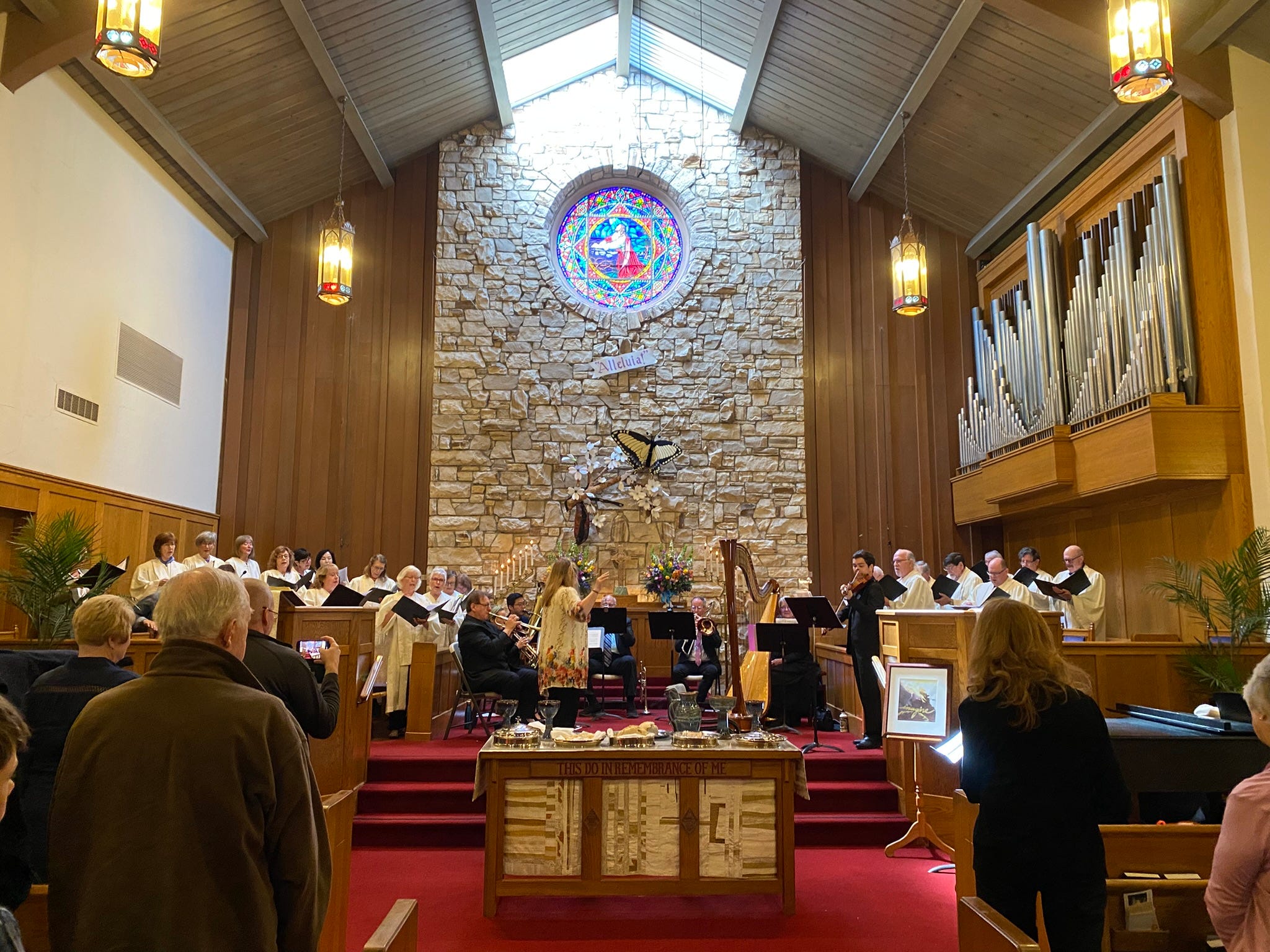
Full house. Beautiful music. Joy, wonder, and resurrection hope in every corner.
1. Easter Is Terrifying
It begins quietly. Just after sunrise, three women walk to the tomb to anoint Jesus’ body—completing the rushed burial. In their world, as in ours, grief needs ritual. But even this tender act is steeped in sorrow.
These women lived under Roman rule, where trauma and state violence were daily realities. They had watched their beloved teacher brutally executed. Their grief was not abstract—it was personal, political, and already present before the tomb.
And yet, somehow, the empty tomb terrifies them even more.
They came expecting death and grief. Instead, they meet an angel who says Jesus is risen. It’s not comforting—it’s disorienting. They flee, trembling and speechless.
Because here’s the truth: Resurrection is terrifying.
We like to skip to joy and victory, but real resurrection—the kind that disrupts the very order of death—isn’t neat or tame. It shatters what we thought we knew. It undoes our assumptions. It takes away the tidy rituals we counted on and throws us into mystery. Into awe. Into holy terror.
When I was a kid, I went to my first funeral. I was nervous already, and then I saw the open casket. My Uncle Lonnie lay there. I was scared stiff. But I worked up the courage to peek in. And in my hyperactive little-kid brain, I swear—I saw him move. I leapt back and shouted, “He’s alive! He’s alive!” It was traumatic!
Sometimes, I wonder if that’s how we come to Easter, too. We show up hoping for something comforting—but also thinking, deep down, “Jesus is dead. This is just a nice story.”
I know, literal, physical, spiritual, mythological, experiential, metaphorical — I’d imagine all of those perspectives are present in this room today.
But here is what we know. SOMETHING happened. Jesus was experienced after his death. How? That’s another conversation. The world was turned upside down, and here we are still talking about it.
Here’s a good question to wrestle with: if death really didn’t have the last word, what would that mean for how we live?
It would mean we’re not in control. We’re not free to cling to our old ways of power and safety and familiarity. We’re called into something disruptive. Something transformative.
Kelly Brown Douglas writes in her book “Stand Your Ground: Black Bodies and the Justice of God” that resurrection is God’s bold No More to crucifying systems like racism, empire, and greed. For the oppressed, resurrection is not abstract. It’s not just spiritual. It’s survival. It’s the divine refusal to let death have the last word.
And so, Easter begins in fear. Because it changes everything.
2. Easter Is Amazing
But the story doesn’t end there.
The angel says, “He has been raised. He is not here. Go and tell the disciples—and Peter—that he is going ahead of you to Galilee.”
“And Peter.” Peter—the one who denied Jesus three times. Peter—the one who failed. Peter is not disqualified. Grace is already chasing him down.
The women stand between trauma and ecstasy—words rooted in the Greek for “terror” and “amazement.” Easter holds both. We live in that tension today—between a broken world filled with war, violence, racial injustice, ecological disaster, the poison of oligarchy. and the glimpses of resurrection that still break through. Have you seen them?
We all saw it just this week, when the picture of Senator Van Hollen of Maryland sitting with Kilmar Abrego Garcia. I exhaled and whispered to myself, “He’s Alive!” What an Easter gift that is, and of course, much more work to bring him home.
I see it:
1. In Black churches, after centuries of violence, holding grief and gospel together as they keep proclaiming that Black lives are sacred. That’s resurrection.
2. In trans and nonbinary youth and their allies marching, testifying, and telling their stories—often at great risk—to claim belovedness in the face of dehumanization. That’s resurrection.
3. In every person in recovery choosing to enter therapy, seek sobriety, leave an abusive relationship, or begin healing from trauma is living a resurrection story, moving from death to life, often in quiet, courageous ways. That’s resurrection.
4. In every spring blossom that bursts through a crack in the sidewalk, every beehive rebuilt after fire or flood, every ecosystem slowly coming back to life—that’s creation’s way of echoing the resurrection. God’s newness keeps showing up in the soil, the sky, the sea.
5. In quiet acts of forgiveness, insisting that love still has the power to heal and restore.
Where do *you* see it?
Sometimes resurrection looks like a dramatic sunrise, but more often it looks like people daring to love again.
And sometimes, it’s just someone showing up—burial spices in hand—waiting for the story to begin again.
These are resurrection stories. They leave us amazed if we pay attention, and in today’s America, we must look for beauty, look for scents of Easter, if we will not live lives marked by anxiety more than gratitude.
Easter isn’t just about what happened to Jesus. It’s about what is happening in us. In the world. Here and now. The promise of Isaiah 25 is alive in our day: God is swallowing up death. Wiping away tears. Preparing a feast of joy. Even in a year like this one. Inisist on it.
3. Easter Is Inviting
But perhaps the most striking thing about Mark’s account is this: it’s unfinished.
The women don’t proclaim. They don’t run to tell the story—yet. They flee in silence. The resurrection doesn’t conclude with a neat bow. Mark ends it mid-breath.
Because resurrection isn’t the end of the story—it’s the beginning of an invitation.
The angel says, “He’s going ahead of you to Galilee.” Galilee—where it all began. Where Jesus first called them. Where the poor were healed, the outcast welcomed, the hungry fed, and the powers challenged. Resurrection is not a detour from justice—it’s the renewal of it.
Where is your Galilee?
Where is the place Jesus is calling you to meet him?
Maybe it’s in a hard conversation you’ve been avoiding.
Maybe it’s leaving behind a toxic relationship, or a belief system that no longer fits the God you’ve come to know.
Maybe it’s in the hard work of healing, therapy, or recovery.
Maybe it’s in saying yes, I need help and support in this chapter of my life.
Wherever it is, Easter invites us there.
And yes, it might feel terrifying. But it will also be amazing because resurrection is God’s promise that nothing is wasted. No failure. No trauma. No death. Nothing is beyond redemption. The final word is always love. Always life.
A few years ago, the show The Crown depicted the real-life disaster in Aberfan, Wales, where a coal mine collapsed and killed scores of children. The camera lingers on the community, standing at the grave site. The queen didn’t go. Prince Philip did. He returned to the palace shaken. And when asked what struck him most, he said, “They didn’t riot. They didn’t scream. They sang. The whole community. It was the most astonishing thing I’ve ever heard.”
They sang.
That’s resurrection. That’s the defiant, tender, amazing response to death’s cruelty—hope refusing to be silenced.
And here we are again. Easter. In a world still aching. And yet… we sing.
Not because death hasn’t done its worst. But because love has done more. Amen. .
Another good one Fred. Miss your sermons!!